Leak-Proof Pads vs. Liners for Workouts: What Actually Holds Up
Quick Answer: Liners work fine for light spotting and everyday workouts, but for high-impact sessions or heavier flow days, a pad rated for moderate-to-heavy absorbency plus a snug base layer holds up better than stacking multiple liners.
You’ve probably tried doubling up liners before a run, only to still feel that damp, shifted mess by mile two. The fix isn’t more liners — it’s picking the right product for the actual activity.

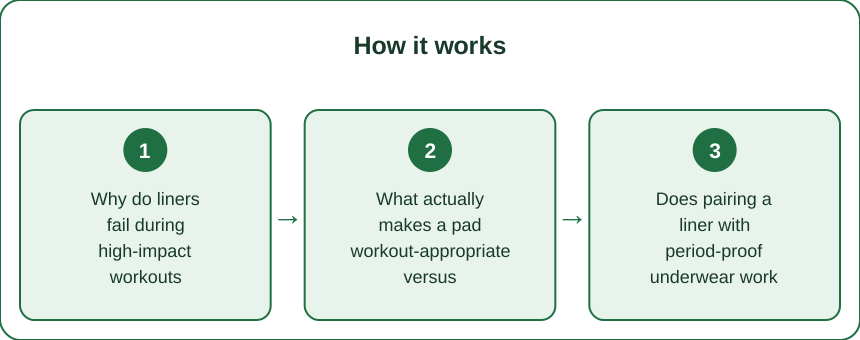
Why do liners fail during high-impact workouts specifically?
Liners are designed for light, mostly stationary absorption — they have a thin core and rely on staying in one place. Running, jumping, and lateral movement in classes like HIIT or dance cause liners to bunch, shift, or fold, which creates gaps rather than more protection. The problem usually isn’t total volume, it’s movement stability.
What actually makes a pad workout-appropriate versus everyday-appropriate?
A workout-rated pad has a narrower, more contoured shape that follows your body during movement, plus a stronger adhesive strip so it doesn’t migrate inside your underwear. Everyday pads are wider and flatter, which feels fine sitting at a desk but bunches uncomfortably during squats or running. Check the packaging for ‘active’ or ‘sport’ language, since those are usually shaped differently.
Does pairing a liner with period-proof underwear work better than either alone?
Yes, for many people this combination is the most reliable option for moderate flow: the underwear acts as a backup layer if the liner shifts, without the bulk of a full pad. This layering approach is especially useful for classes where you’re moving unpredictably, like kickboxing or dance, where a single product’s failure point is harder to predict.
How often should you actually change protection during a long workout?
For workouts over 60-90 minutes, plan on a mid-session change if you have access to a bathroom, since sweat plus flow saturates products faster than either alone would. A quick check at a water break takes 30 seconds and prevents the surprise of discovering a leak only after you’re already sitting in a car or on a mat.
Myth vs Fact: Leak-Proof Workout Protection
Myth — more absorbency always means more protection. Fact — shape and fit stability during movement matter more than raw absorbency for preventing workout leaks, since a shifted product fails regardless of capacity. Myth — leak-proof underwear alone is enough for heavy flow days at high intensity. Fact — most period-proof underwear is rated for light-to-moderate flow and works best as a backup layer, not the sole line of defense, on heavier days.
FAQ: Workout Leak Protection, Answered
Can you wear a tampon and a pad together for extra security during a workout?
Yes, this combination is common and safe for higher-intensity sessions or heavier days, since the tampon handles internal flow and the pad catches any surface leakage from movement.
Do darker workout leggings actually hide leaks better?
Somewhat — darker colors and busier patterns make small leaks less visible, but they don’t prevent the actual leak, so they’re a cosmetic backup rather than a real protection strategy.
How do you know if a product has failed versus just shifted?
A quick bathroom check mid-workout tells you: if the product is still centered but simply saturated, it’s failed from capacity; if it’s visibly bunched or moved to one side, it’s failed from movement, which points to a shape or fit problem next time.
TL;DR:
- Liners work for light spotting but shift during high-impact movement
- Sport-shaped pads with strong adhesive hold up better than doubled liners
- Pairing a liner with period-proof underwear adds a reliable backup layer
- Plan a mid-session change for workouts over 60-90 minutes
The right combination depends on your flow and the workout’s intensity, but matching the product’s shape to the movement — not just stacking more absorbency — is what actually prevents the leak.
Keep Reading
This article is for general informational purposes only and is not medical advice. Always consult a qualified health professional for guidance specific to you.