Why Bladder Leaks Get Worse When You Are Dehydrated, Not Better
Quick Answer: Cutting fluids concentrates your urine, and concentrated urine irritates the bladder lining, which increases urgency and makes leaks more likely rather than less. Restricting also gradually reduces functional bladder capacity, so the bladder starts signalling at smaller volumes. Steady hydration through the day - rather than large amounts at once - produces fewer symptoms than restriction for most people, which is the opposite of the instinct.
You stopped drinking water two hours before the class to be safe, and somehow you leaked more than the week you turned up properly hydrated.

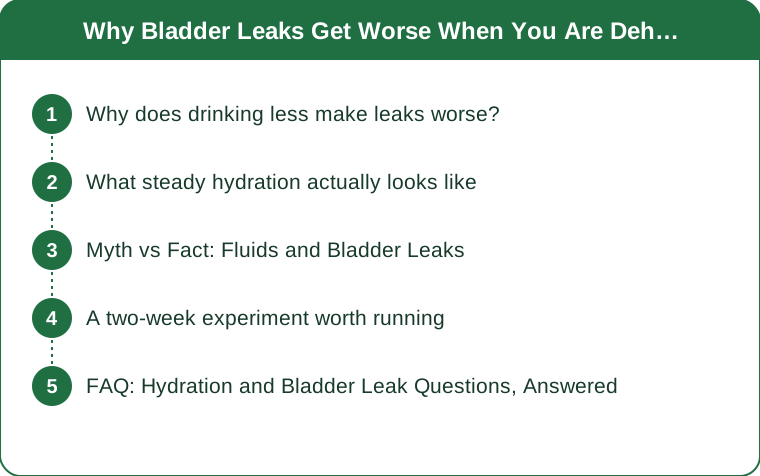
Why does drinking less make leaks worse?
Two mechanisms, and they compound each other.
Concentrated urine irritates the bladder lining. Less fluid means a higher concentration of waste products, and that concentrated urine is chemically irritating to the bladder wall. An irritated bladder signals urgency earlier and more insistently.
Urgency is what turns a full bladder into a leak. For most people, the leak does not happen because the bladder is full; it happens because the urge arrives suddenly and the pelvic floor is caught unprepared. More urgency means more of those moments.
Restriction shrinks functional capacity over time. A bladder that is habitually kept at low volumes gradually adapts to signalling at those low volumes. Weeks of restriction leaves you needing the toilet more often, not less.
Dehydration also affects tissue quality. Pelvic floor and urethral tissues, like all tissues, function less well when the body is short of fluid, though this is a smaller effect than the two above.
And it tends to spiral. More urgency leads to more restriction, which produces more concentration and less capacity, which produces more urgency. People often arrive at a pelvic health appointment several months into this loop.
The tell: dark yellow urine plus frequent urgency is the classic combination. If both are present, restriction is likely part of the problem rather than part of the solution.
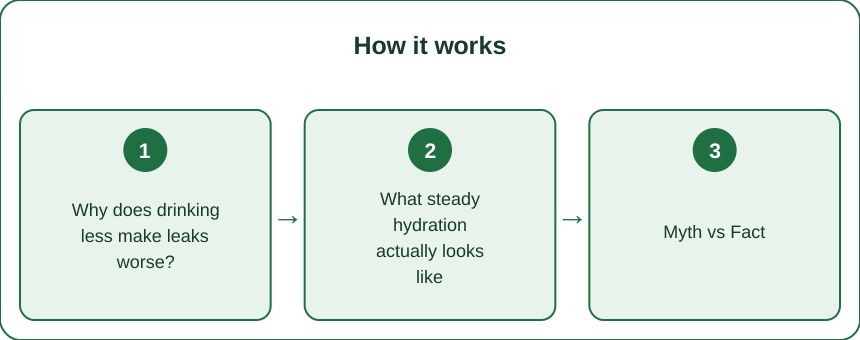
What steady hydration actually looks like
The pattern of drinking matters as much as the amount.
Spread intake through the day rather than in bursts. A large volume at once fills the bladder rapidly and produces exactly the urgency you are trying to avoid. Regular small amounts keep concentration down without spikes.
Aim for pale straw colour. More useful than any fixed number of glasses, since requirements vary with body size, heat, and activity. Dark yellow means too little; completely clear usually means more than necessary.
Front-load the day if nights are a problem. Most of your intake earlier, tapering in the two to three hours before bed, reduces overnight waking without leaving you dehydrated during the day.
Increase in hot weather, not decrease. Late-summer sweating changes the balance considerably, and people who maintain their winter intake through a heatwave are frequently more concentrated than they realise.
Drink normally before exercise. Turning up dehydrated to avoid leaking during a class reliably backfires. Have your usual fluid and empty your bladder shortly beforehand instead.
Watch the specific irritants rather than the total. Caffeine, carbonated drinks, artificial sweeteners, and alcohol are bladder irritants for many people. Reducing those often helps more than reducing water, and it costs nothing to test for a fortnight.

Myth vs Fact: Fluids and Bladder Leaks
Myth: Drinking less water means fewer leaks. Fact: It usually means more. Concentrated urine irritates the bladder lining and increases urgency, and sustained restriction reduces functional capacity so the bladder signals at smaller volumes.
Myth: Going to the toilet just in case is sensible preparation. Fact: Occasionally before exercise, yes. As a habit, it trains the bladder to signal at low volumes and is one of the most common contributors to increasing frequency over time.
Myth: You should drink two litres a day regardless. Fact: Requirements vary substantially with size, activity, and climate. Urine colour is a far more useful guide than a fixed target, and pale straw is the aim.
Myth: If you leak during exercise you should stop exercising. Fact: Leaking is a signal to modify and to address the pelvic floor, not to stop. Exercise is protective for pelvic health overall, and avoidance tends to make the underlying issue worse.
Myth: Leaks are just part of having children or getting older. Fact: They are common, which is not the same as inevitable or untreatable. Pelvic floor physiotherapy has a strong evidence base for stress incontinence, and most people improve substantially.
Myth: Kegels alone will fix it. Fact: They help many people and are only part of the picture. Breathing mechanics, pressure management during lifting, and coordination timing all matter, and some presentations involve an overactive pelvic floor where more squeezing makes things worse. This is exactly why assessment beats guessing.
This is general information, not medical advice. Persistent leaking deserves an assessment by a pelvic health physiotherapist or your doctor.
A two-week experiment worth running
Rather than guessing, gather a small amount of data.
Days 1 to 3, change nothing and record. Note fluid intake roughly, urine colour, urgency episodes, and any leaks with what you were doing. Three days is enough to see a pattern.
Days 4 to 10, normalise hydration. Steady intake spread through the day, aiming for pale straw colour, tapering in the evening. Keep everything else the same so you are testing one variable.
Days 11 to 14, remove one irritant. Caffeine is the usual first candidate. Reduce rather than eliminate abruptly if you drink a lot of it, since caffeine withdrawal headaches will muddy the results.
Watch for a delayed improvement. Bladder irritation settles over days rather than hours, and functional capacity takes longer still. Two weeks is the minimum useful window.
Note the exercise context specifically. Leaks during jumping, during running, at the end of a session, or during coughing all point in slightly different directions, and that detail is genuinely useful to a physiotherapist.
Take the record to an appointment. A two-week log makes a first pelvic health consultation dramatically more productive than trying to remember what happened.
And do not use the experiment as a reason to delay help. If leaks are frequent, worsening, or affecting what you are willing to do, book the appointment now and run the log while you wait.
FAQ: Hydration and Bladder Leak Questions, Answered
Should I drink less water to reduce leaks?
No. Restriction concentrates urine, which irritates the bladder and increases urgency, and over weeks it reduces functional bladder capacity so you need the toilet more often. Steady hydration produces fewer symptoms for most people.
How much should I drink?
Enough for pale straw coloured urine, spread through the day rather than in large amounts at once. Fixed targets ignore differences in body size, activity level, and how hot the weather is.
Should I drink before a workout if I leak during exercise?
Yes, drink normally and empty your bladder shortly beforehand. Turning up dehydrated to be safe reliably backfires, because concentrated urine increases the urgency that causes most leaks.
Does caffeine make bladder leaks worse?
For many people, yes - caffeine, carbonated drinks, artificial sweeteners, and alcohol are common bladder irritants. Reducing those usually helps more than reducing water, and a two-week trial will tell you whether it applies to you.
Is going to the toilet just in case a bad habit?
As a routine, yes. It trains the bladder to signal at progressively smaller volumes and is a common reason frequency increases over time. Before exercise occasionally is reasonable.
TL;DR:
- Cutting fluids concentrates urine, which irritates the bladder and increases the urgency that causes most leaks.
- Sustained restriction also shrinks functional capacity, so you need the toilet more often over time.
- Spread intake through the day, aim for pale straw colour, taper in the evening.
- Target caffeine and other irritants before you target water.
- Run a two-week log and take it to a pelvic health physiotherapist.
The instinct to drink less is understandable and it is pointed in exactly the wrong direction.
Keep Reading
This article is for general informational purposes only and is not medical advice. Always consult a qualified health professional for guidance specific to you.