Why Some Bladder Leaks Happen During Laughing or Coughing, Not During a Run
Quick Answer: Leaks during sudden pressure events like laughing or coughing usually come from a fast, unanticipated spike in abdominal pressure that the pelvic floor doesn’t have time to brace against, while running leaks are more about sustained repetitive load — the fix for each is genuinely different.
Running is fine. A hard laugh at dinner is not. It feels backwards until you look at what’s actually happening in each moment.

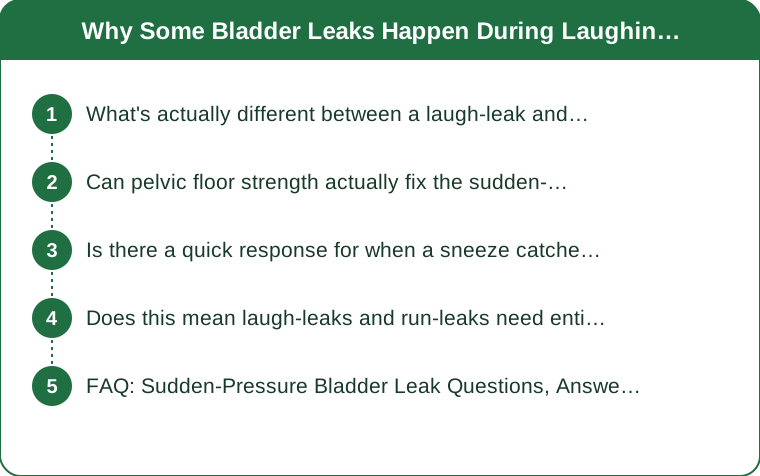
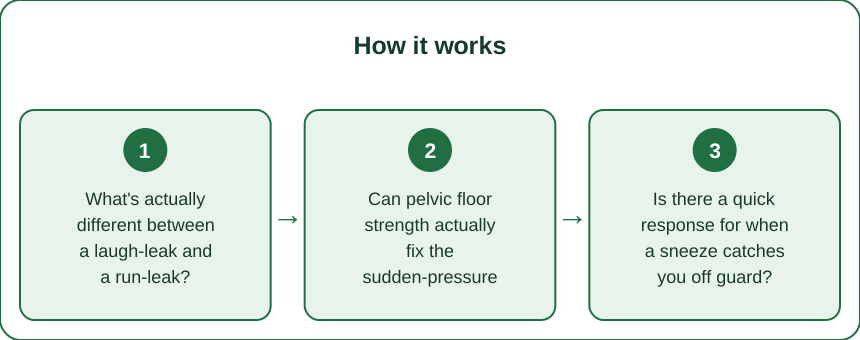
What’s actually different between a laugh-leak and a run-leak?
A cough or laugh creates a sudden, unpredictable spike in abdominal pressure, giving the pelvic floor no time to pre-brace — whereas running impact, while repetitive, is a rhythm your body can anticipate and prepare for stride by stride.
This is why some people with strong pelvic floors from regular exercise still leak on a surprise sneeze — the muscle strength is there, but the reflexive, split-second timing of the brace is a separate skill.
Can pelvic floor strength actually fix the sudden-pressure kind of leak?
Strength alone isn’t the full answer — timing the contraction to fire right as the pressure spike happens matters just as much, which is a different training focus than the sustained-endurance work that helps with running.
Practicing a quick, reflexive pelvic floor squeeze right before an anticipated cough or sneeze (a technique sometimes called “the knack”) directly targets this timing gap.

Is there a quick response for when a sneeze catches you off guard?
Crossing your legs and doing a fast pelvic floor squeeze the instant you feel a sneeze coming reduces leak likelihood, even with minimal warning — it’s a small window, but often enough.
Over time, practicing this response consistently can make it more automatic, similar to how a flinch reflex develops with repetition.
Does this mean laugh-leaks and run-leaks need entirely separate treatment plans?
Largely, yes — physical therapists often program them differently, with sustained-load training (like controlled loaded exercises) for running-related leaks, and reflexive timing drills for sudden-pressure leaks.
That said, overall pelvic floor health supports both, so a base level of general pelvic floor conditioning still matters regardless of which type of leak is more prominent.
FAQ: Sudden-Pressure Bladder Leak Questions, Answered
Is leaking during laughing normal or a sign of a bigger problem?
It’s common, especially postpartum, but persistent leaking is worth discussing with a pelvic floor physical therapist rather than assuming it’s just something to live with.
Can I practice the quick-squeeze technique anywhere?
Yes — it’s discreet enough to practice during a normal cough or laugh in daily life, which is actually the best way to build the reflex.
Should I see a specialist if only the sudden-pressure kind bothers me?
A pelvic floor PT can assess timing-specific issues even if your general strength seems fine, since the two skills are genuinely separate.
TL;DR:
- Sudden-pressure leaks (laughing, coughing) come from a timing gap, not just a strength gap
- Running leaks relate more to sustained, repetitive load over a session
- A quick reflexive squeeze right before a cough or sneeze can reduce leak likelihood
- The two leak types often benefit from different training approaches
If strength training hasn’t fixed a laugh-leak, the missing piece is probably timing, not effort. This is general information, not medical advice.
Keep Reading
This article is for general informational purposes only and is not medical advice. Always consult a qualified health professional for guidance specific to you.