Why Pelvic Floor Symptoms Can Feel Worse Some Weeks of Your Cycle Than Others
Quick Answer: Pelvic floor symptoms can genuinely fluctuate across the menstrual cycle because estrogen affects connective tissue elasticity and collagen support — lower estrogen phases (just before and during your period) are commonly associated with reduced tissue support, which can make leaks or pressure feel more noticeable even without any change in your actual pelvic floor training consistency.
You do the same pelvic floor exercises every week, yet leaks feel more frequent right before your period than the rest of the month. That’s not your training failing — it’s a real hormonal shift in tissue support.

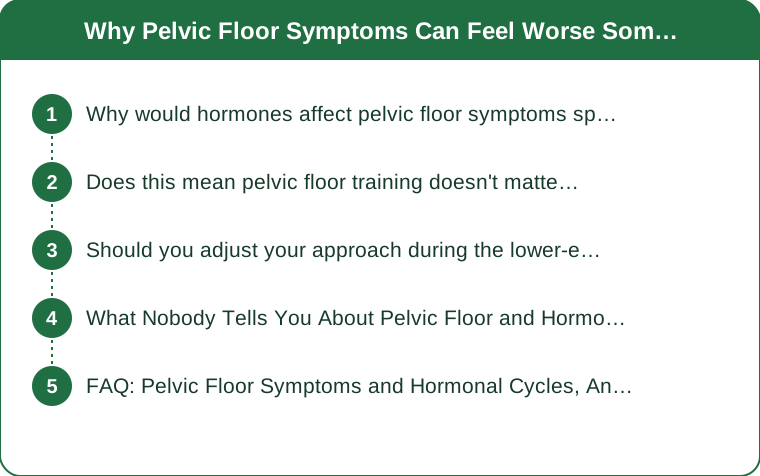
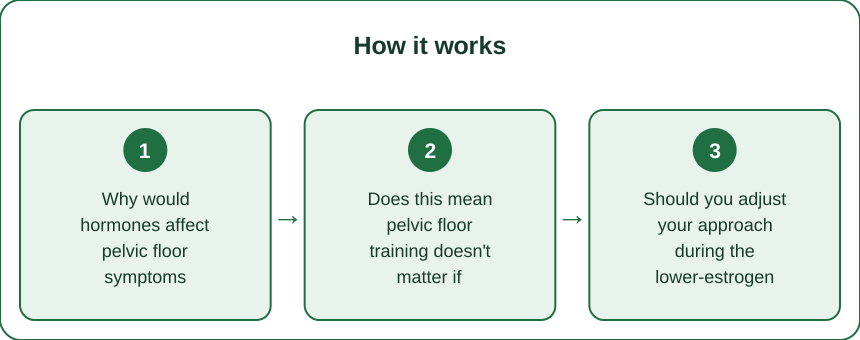
Why would hormones affect pelvic floor symptoms specifically?
Estrogen supports collagen production and connective tissue elasticity, including in pelvic floor structures, and estrogen levels drop in the days leading up to and during menstruation. This can translate into a temporary reduction in tissue support during that window, independent of how consistent your pelvic floor training has been.
This pattern is increasingly recognized in pelvic health research, though individual experience varies — some people notice a clear cyclical pattern and others don’t notice much difference at all.
Does this mean pelvic floor training doesn’t matter if hormones are driving symptoms?
No — consistent pelvic floor training still builds the baseline strength and coordination that determines how much a hormonal dip actually affects you, even if it doesn’t eliminate the fluctuation entirely. Think of hormonal shifts as changing the difficulty of the week, not erasing the benefit of the training itself.
People with a stronger trained baseline generally report a smaller and more manageable symptom increase during low-estrogen weeks than those without any pelvic floor training at all.

Should you adjust your approach during the lower-estrogen week?
It can help to be slightly more mindful during high-impact activity in the days just before and during your period — this doesn’t mean stopping exercise, but being aware that support may be temporarily reduced and adjusting expectations or protective measures (like liners during workouts) accordingly. Continuing pelvic floor exercises through this week, rather than skipping them, still supports the muscles even though the tissue backdrop is different.
Tracking symptoms alongside your cycle for a couple of months can help you see your own personal pattern clearly enough to plan around it.
What Nobody Tells You About Pelvic Floor and Hormones
Nobody tells you that this cyclical connective tissue effect is the same broad mechanism behind why some people notice more joint laxity or injury susceptibility at certain cycle points too — it’s not unique to the pelvic floor, just less talked about in that context. Recognizing it as a normal physiological pattern, rather than a personal failure of consistency, changes how you respond to it.
They also don’t tell you that stress and poor sleep, which often cluster around PMS symptoms anyway, can independently affect pelvic floor tension and add to the same-week symptom increase.
FAQ: Pelvic Floor Symptoms and Hormonal Cycles, Answered
Should I stop pelvic floor exercises during my period?
No — continuing supports the muscles regardless of the tissue backdrop; just adjust intensity if you’re also dealing with cramping or fatigue.
Is it worth tracking symptoms alongside my cycle?
Yes, tracking for 2-3 cycles helps you distinguish a real personal pattern from a one-off bad week, and gives you something concrete to plan around.
Should I see a pelvic floor physical therapist if this pattern is significant for me?
If cyclical symptoms are meaningfully affecting your daily life or exercise, a pelvic floor PT can assess whether additional targeted support is worth adding.
TL;DR:
- Lower estrogen just before and during your period is linked to reduced connective tissue support
- Pelvic floor training still builds the baseline strength that determines how much this affects you
- Stay consistent with exercises through this week rather than skipping them
- Tracking symptoms against your cycle for a couple months reveals your own real pattern
A worse pelvic floor week isn’t your training undone — it’s a real hormonal shift layered on top of it, and understanding that takes the guilt out of a pattern that was never about effort in the first place.
Keep Reading
This article is for general informational purposes only and is not medical advice. Always consult a qualified health professional for guidance specific to you.