Lifting Heavy and the Pelvic Floor (Pressure Management, Not Avoidance)
The standard advice to women experiencing pelvic floor symptoms when lifting is to lift lighter, which is both unsatisfying and often unnecessary — the issue is usually how pressure is being managed rather than how much weight is on the bar. Here is why lifting raises pressure, how to manage it, and when to get help.

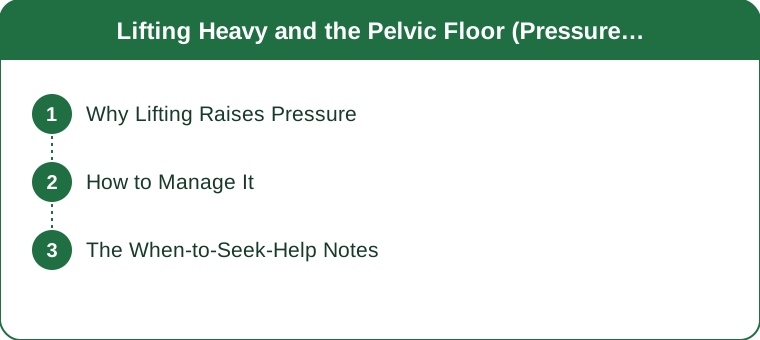
Why Lifting Raises Pressure
A closed system under load: the the-bracing-increases-intra-abdominal-pressure (the brace deliberately raising internal pressure from the pelvic-floor-exercise logic — the bracing-raises-pressure), the the-that-pressure-has-to-go-somewhere (the pressure distributing through the system including downward from the everyday-habits logic — the pressure-goes-somewhere), the the-the-pelvic-floor-is-part-of-the-container (the pelvic floor forming the base of the pressure system from the pelvic-floor-exercise logic — the floor-is-the-base), the the-breath-holding-compounds-it (the holding the breath throughout increasing the load from the pelvic-floor-exercise logic — the breath-holding-compounds), the the-it-is-mechanics-not-weakness (the the issue being pressure management rather than simple weakness from the bladder-leaks logic — the mechanics-not-weakness), and the reframe (the lifting-related pelvic floor symptom as a pressure management issue — the brace raising internal pressure that has to go somewhere, with the floor forming the base of the container).

How to Manage It
Coordinating the system: the the-exhale-on-the-effort (the breathing out through the hardest part of the lift from the pelvic-floor-exercise logic — the exhale-on-effort), the the-coordinate-the-floor-with-the-breath (the timing pelvic floor engagement with the exhale from the pelvic-floor-exercise logic — the coordinate-with-breath), the the-do-not-bear-down (the avoiding downward straining during effort from the pelvic-floor-exercise logic — the do-not-bear-down), the the-brace-without-pushing-out (the bracing laterally rather than pushing the abdomen forward from the pelvic-floor-exercise logic — the brace-without-pushing), the the-build-the-floor-alongside-the-lift (the training the pelvic floor as part of the programme from the everyday-habits logic — the train-the-floor-too), the the-progress-load-gradually (the increasing weight progressively rather than in jumps from the pelvic-floor-exercise logic — the progress-gradually), the the-check-your-technique-first (the reviewing lifting technique before reducing load from the pelvic-floor-exercise logic — the technique-first), and the the-avoidance-weakens-the-system (the avoiding loading entirely reducing capacity further from the everyday-habits logic — the avoidance-weakens).
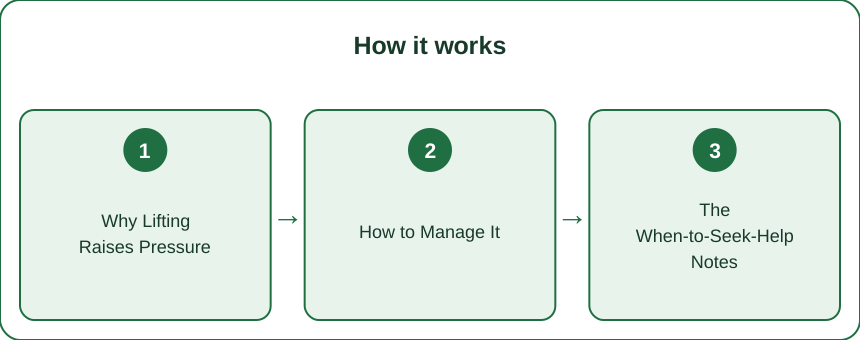
The When-to-Seek-Help Notes
Getting proper assessment: the the-leaking-is-common-but-not-normal (the symptoms being common and still worth addressing from the bladder-leaks logic — the common-not-normal), the the-heaviness-or-dragging-warrants-assessment (the a heaviness sensation needing professional review from the bladder-leaks logic — the heaviness-warrants-review), the the-a-pelvic-health-physiotherapist-is-the-referral (the pelvic health physiotherapy being the appropriate specialty from the pelvic-floor-exercise logic — the pelvic-health-physio), the the-do-not-just-do-more-kegels (the more exercises not being the answer for every case from the pelvic-floor-exercise logic — the not-just-more-kegels), the the-some-floors-are-overactive-not-weak (the tension rather than weakness being the issue for some from the pelvic-floor-exercise logic — the overactive-not-weak), the the-postpartum-needs-specific-guidance (the postpartum lifting requiring tailored advice from the everyday-habits logic — the postpartum-specific), the the-you-do-not-have-to-stop-lifting (the appropriate management usually allowing continued lifting from the pelvic-floor-exercise logic — the do-not-have-to-stop), and the frame (the lifting and pelvic floor question as pressure management — exhaling on effort, coordinating the floor with the breath and not bearing down — with a pelvic health physiotherapist for persistent symptoms. Exhale on the effort, coordinate your floor with your breath, avoid bearing down, and see a pelvic health physiotherapist for persistent symptoms. This is general information, not medical advice.)
The standard advice to women experiencing pelvic floor symptoms when lifting is to lift lighter, which is often unnecessary — the issue is usually how pressure is managed rather than how much weight is on the bar. Lifting raises pressure because bracing increases intra-abdominal pressure, that pressure has to go somewhere, the pelvic floor is part of the container, breath holding compounds it, and it is mechanics rather than weakness. Manage it by exhaling on the effort, coordinating the floor with the breath, not bearing down, bracing without pushing out, building the floor alongside the lift, progressing load gradually, and checking technique before reducing load. Seek help because leaking is common but not normal, heaviness warrants assessment, a pelvic health physiotherapist is the referral, and more kegels are not always the answer. This is general information, not medical advice.
See It in Motion
Seen here: Maternity Capris with Side Pockets — shop it on bubblelime.com
Keep Reading
This article is for general informational purposes only and is not medical advice. Always consult a qualified health professional for guidance specific to you.